
“I didn't want to run somebody else's business. I wanted my own.”
Ivett was five when she painted her nails at the kitchen table with her mother's polish. Twenty-seven years later, on a random 27 December, she decided this would be her year, and applied for a course the same day. In between there was a whole life: cleaning hotel rooms in England, a coffee shop, shift lead, store manager — and the realisation that all of it belonged to somebody else.
She says herself she is still in her first years. “I enjoy this bumpy road, but I am not sure a professional audience would — though it might help somebody who is starting out now.” Which is why we asked her to tell it.
The road here
How did you start doing nails? Was there somebody, or something, that set you off?
For as long as I can remember I have been interested in nails. I still remember being about five, painting my nails at the kitchen table with my mother's polish. That should have been a strong enough sign, but somehow it took another twenty-seven years before I decided it was time.
I had a run at it once before, but as a teenager it was a very different thing. I was mostly trying out how to do this or that, picking up techniques. My teachers at school had their own opinions about what I should be spending my time on — and then once I got to England, a steady income mattered more than dreams.
Then came a random 27 December when I decided: the next one is my year. I sent off my application to a course straight away, and later to another one.
I had already made up my mind, but there was one person who did a lot to keep me from giving up: Sirokai Marcsi. During the course she gave me professional advice, kept encouraging me, and kept getting me past my own limits.
How did you end up in England, and what was it like starting from nothing there?
I arrived straight out of school, so I effectively started my adult life here. Why? I needed money, and preferably a long way from what I was living in.
It was a long road to becoming a nail technician here — and as at school, nobody here understood why either, when I could have had a much bigger career. I started as a hotel cleaner, then worked as a barista in an airport coffee shop, then was promoted to shift lead, then to assistant manager, when Covid closed the shop. I started somewhere new, at the very bottom of the ladder. I became a barista again, then assistant manager, then manager.
And when I had reached everything I thought I never would, I realised it did not make me happy. I had learnt an enormous amount about business, I had more and more success behind me, but something was missing. I wanted something of my own, more and more.
“I didn't want to run somebody else's business. I wanted my own.”
Of course a few months passed before I had the courage to start. It did not go the way I wanted, because I pulled the safety net out from under myself quickly, and I really did have to decide: I am doing this. Now I am a nail technician half the time and an assistant manager in a shoe shop the other half. The security is there, and I get to do what I love.
What was the hardest part of the first year?
The work. Joking aside: not so much the work as the way I was treated. Nobody there was treated especially well, and at the time I had no money to rent a room or a flat, so the job provided accommodation and two meals a day — which were then deducted from my wages. Which meant they could have my time whenever they wanted. I was often woken on a day off to be told I had to come in, and they would come round to check whether I was really ill.
The daily emotional and psychological load I will only mention: every day my supervisor told me I was no good at anything, and that without this job I would have nothing.
“And for a while I believed it. Not because I am gullible, but because if you are told something often enough, you start to believe it.”
It took a year and a half before I said: no more of this.
Her work
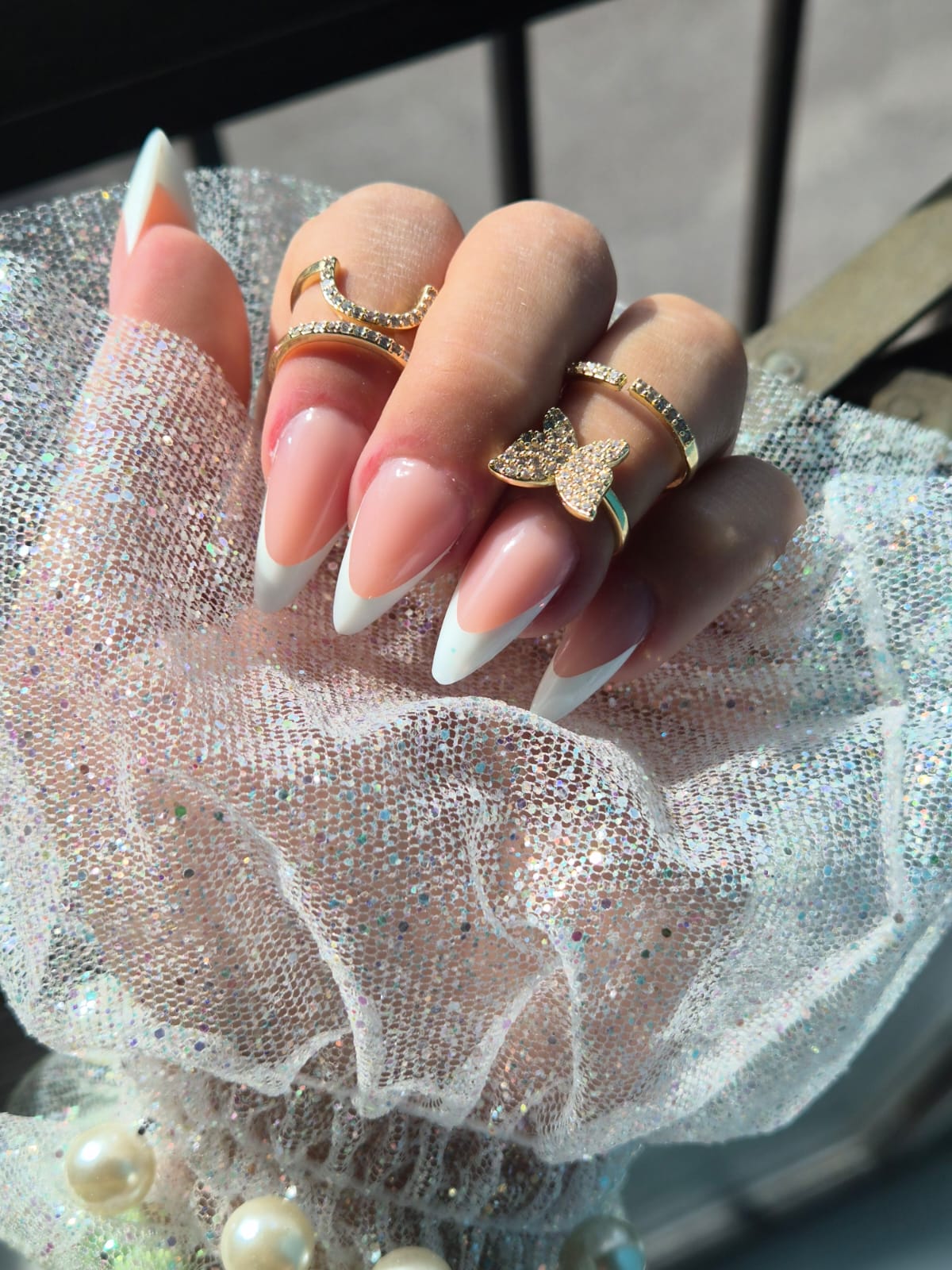
Is there a style or a technique that gives your work away from across the room?
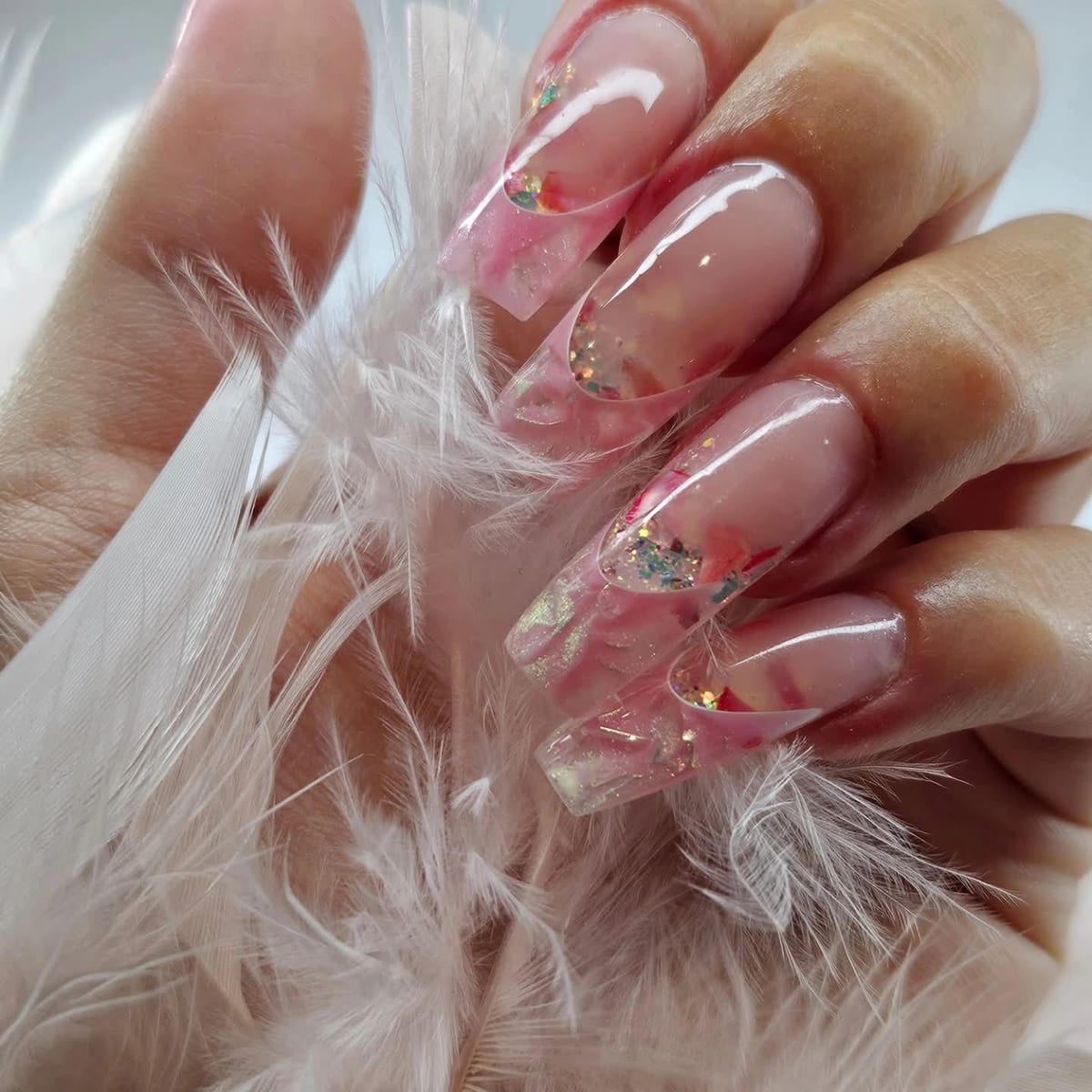
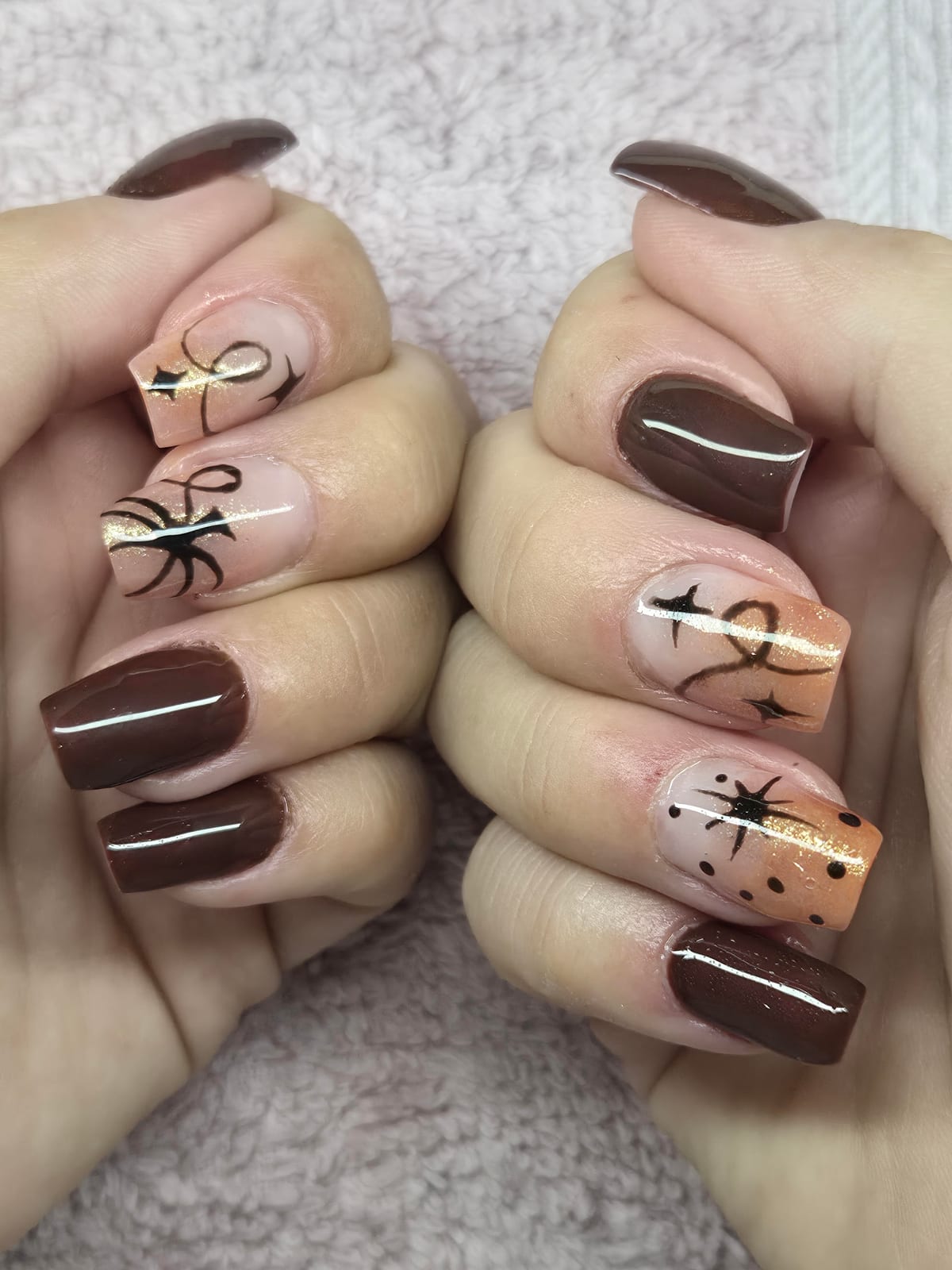
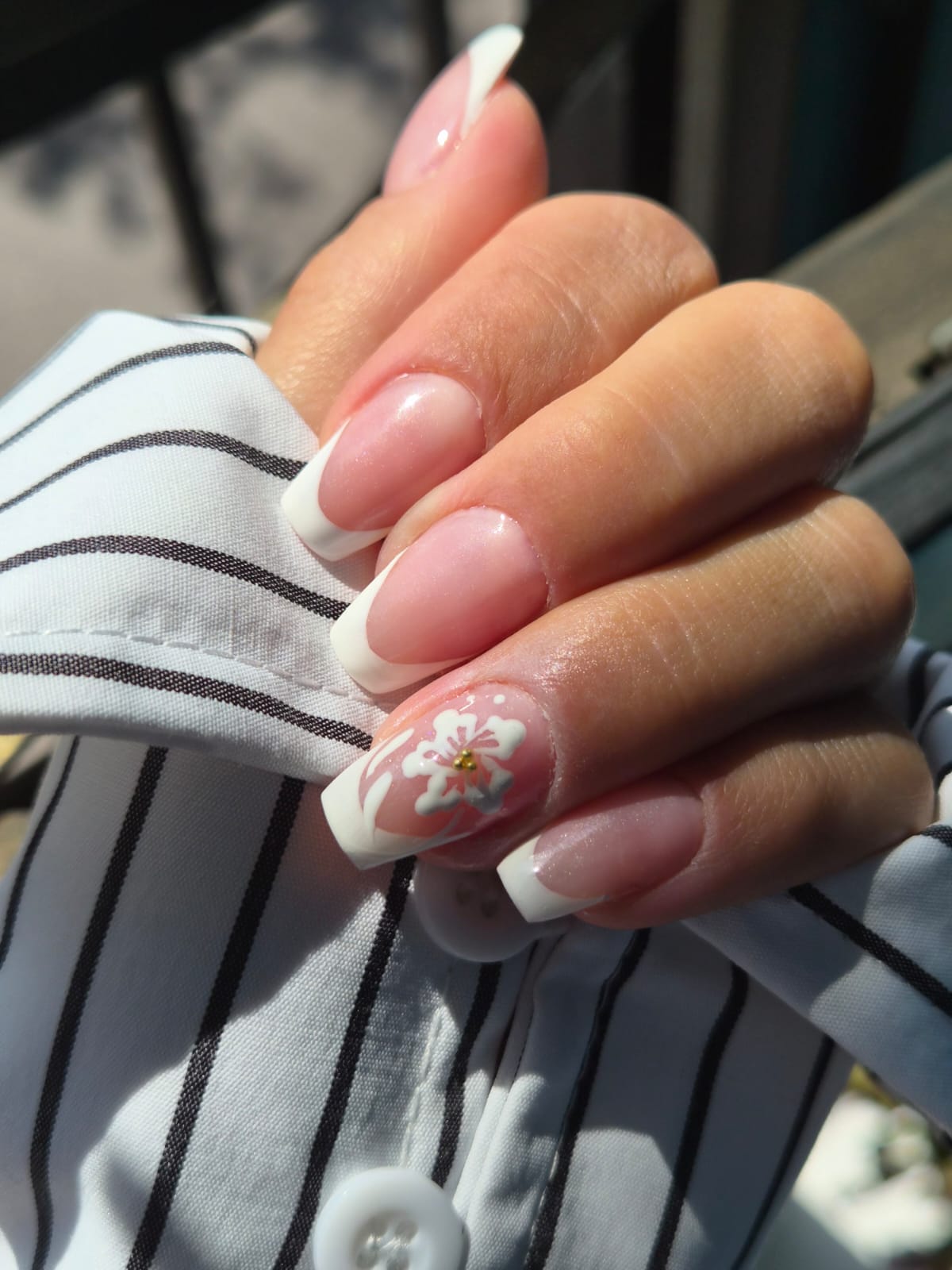
Sadly, not yet. My teachers' style still shows in my work far more strongly than my own. But having been lucky enough to learn from a Hungarian nail technician as well gave me technical knowledge my English colleagues do not necessarily have.
Which piece of work are you proudest of?
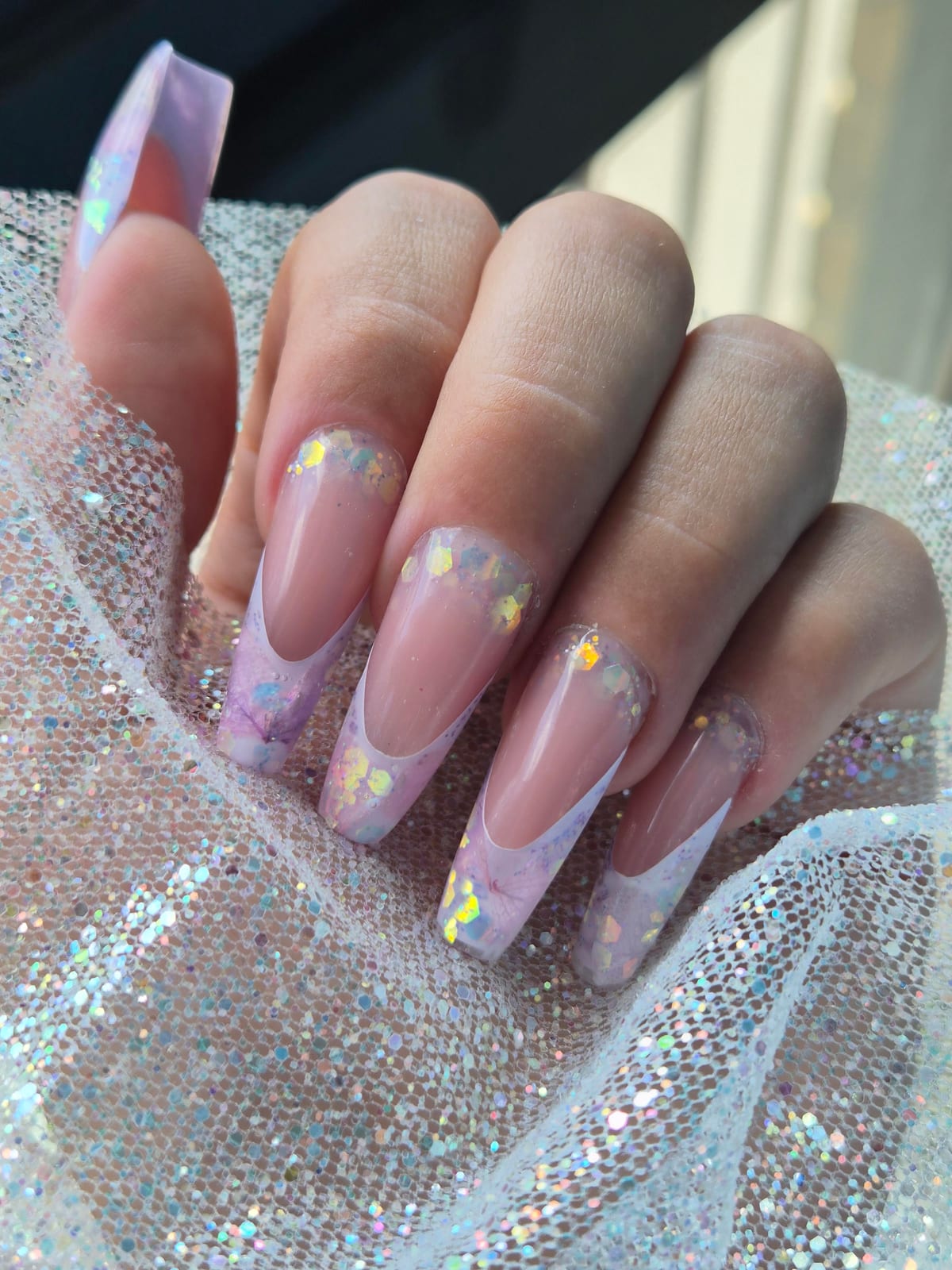
The lilac sculpted French. It was the final piece of my course. It showed me how far I had come, and what I am capable of when I really set my mind to it.
What did you learn about this trade that you did not know at the start?
Besides the technical side: that it really is down to me alone. I really do have to give it everything every day, nobody is going to come along behind me. I did not only become a nail technician — I became a bookkeeper, a social media manager and a cleaner, while also being an understanding person and a devoted wife.
What does an average day look like for you?
It still varies enormously, no two days are the same. But the morning routine is always the same: before a guest arrives, or before I leave for my other job, I advertise — Facebook, Instagram, TikTok. The videos and the ads I prepared the night before go out.
I am open for guests from nine, but often my first booking is much later, or there is not one at all. I use every bit of that time: if I have no guest I film or edit, write ad copy, work on my technique, try out new products. The end of the day varies just as much, depending on how many people there are.
The evening is usually quiet. I do the things that need doing at home, once or twice a week my husband and I go to the gym, and later I think through whether there is anything I can prepare, whether I need to make an ad, whether there is paperwork. If there is, I do it — but hopefully by around nine the evening belongs to resting.
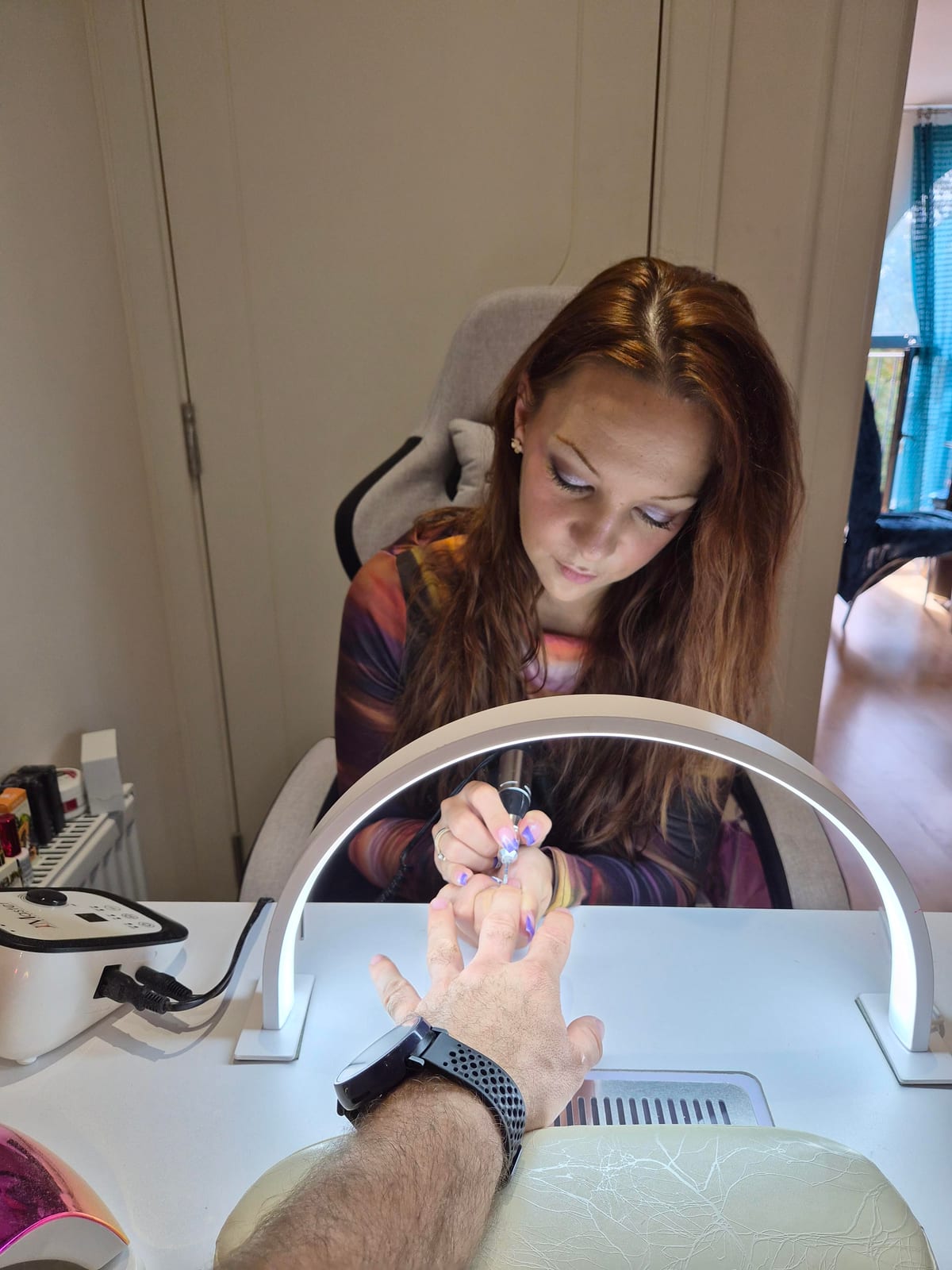
Her guests
What are your guests like? What brings them to you rather than somebody else?
Mixed. At the start it was colleagues, and then as I began advertising the Hungarians found me too. Everyone I asked chose me because I was close by, and because they liked my work.
Is there a guest who has been with you from the beginning?
Sadly not. People come and go. But I know that where two of us are not compatible, this is the right outcome in the long run.
What is the best feeling in this job?
That it is mine. Do not misunderstand me: I love the work itself, my guests are all lovely — but I spent a long time inside somebody else's business. I built this one from nothing, I am still building it, and I am extremely proud of that.
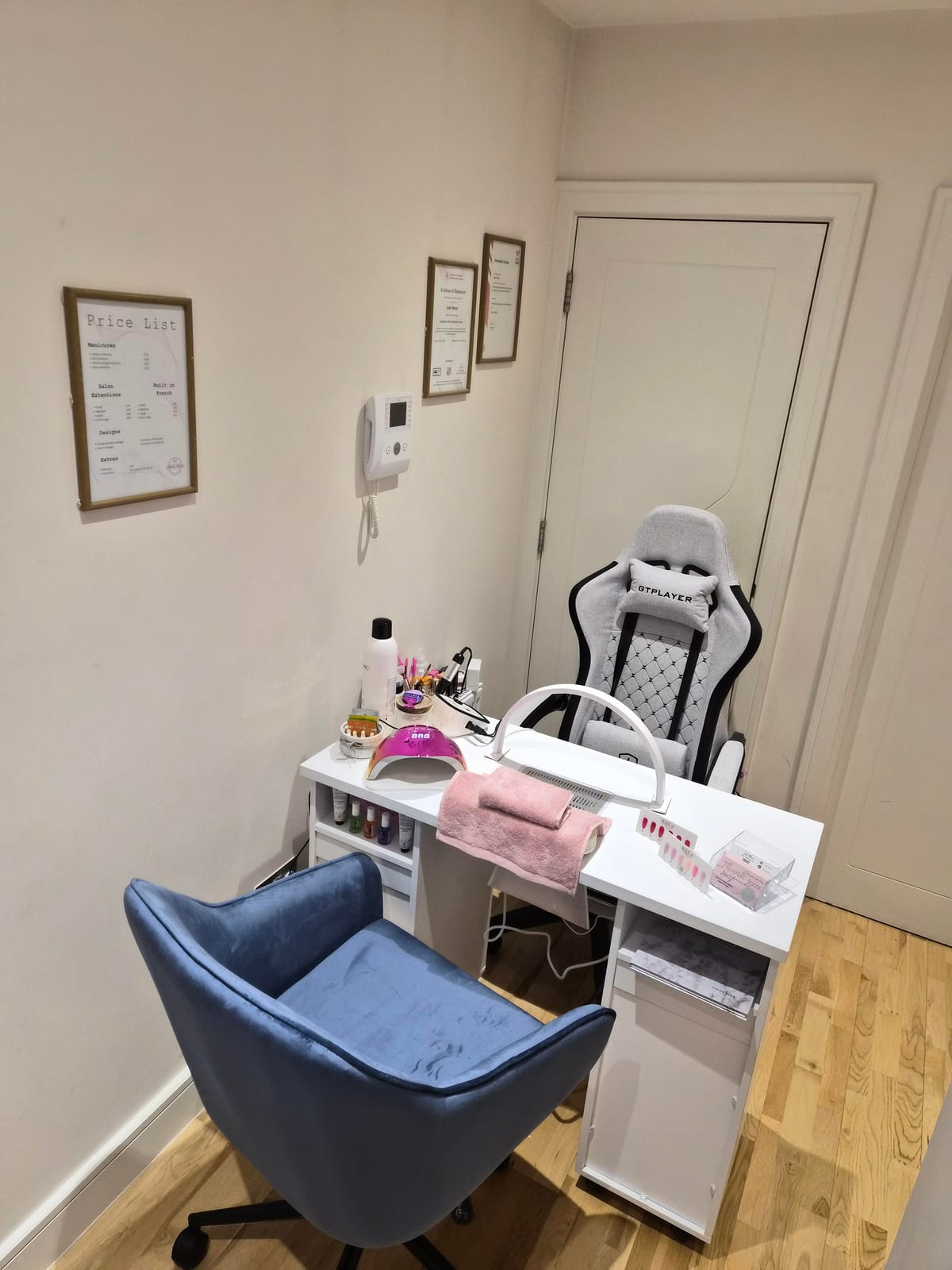
Forward
Where would you like the salon to be in a year or two?
I would like to be able to call this my main job in a year or two. For me it is not a hobby, but this early on not many people believe in the success yet. I would like the persistence and the work I have put in to bring the success with it.
And I know success means different things — for me it is not necessarily money. I want to be the nail technician people recommend to each other warmly. Who is not only good at the job, but good with people.
What would you say to somebody who is thinking about starting now?
Do you love it? Then do it. But be ready to be on your own, and for there to be an enormous amount of work. The friends who said they would support you might come to you once, but they will drift away — friends only rarely become your guests at the start. The guests who do come to you at the start are the ones who will confirm you are on the right road.
One practical question
How did booking work for you before you moved over?
They could reach me on Messenger or by phone. But almost everyone used Messenger, which was extremely frustrating: I often only saw a message a week later, even though I checked the message requests every day.
Keep reading
 How online booking is spreading in countries where salons still take bookings by phone — and what it gives owners and clients
 Salon booking systems compared, country by country: prices, commission and features in the UK, Ireland and across Europe (2026)
 Why you have fewer clients lately, and what you can do about it this week